- Guidelines for Checked Baggage Inspection (Effective Date: October 16, 2026)
In accordance with the Notification of the Civil Aviation Authority of Thailand (CAAT) on Checked Baggage Inspection B.E. 2569 (2026) and CAAT Regulation No. 113 on Criteria and Methods for Inspections to Ensure Security in Public Airport Operations (as amended) regarding the preparation and inspection of checked baggage. This guideline aims to clarify the authority of airport operators and the responsibilities of passengers during the baggage screening process to ensure aviation security.
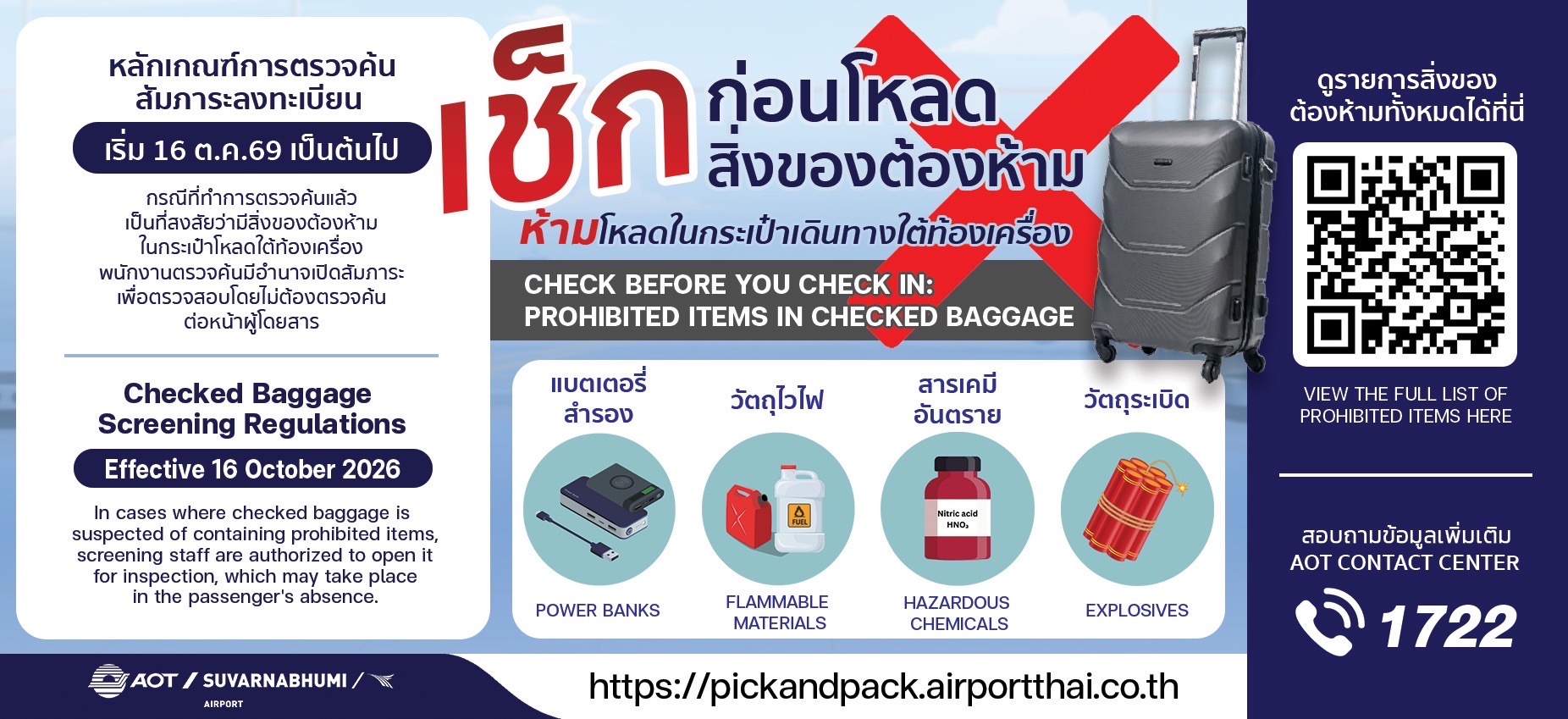
- Authority to Inspect Baggage
Security screening personnel are authorized to open and inspect checked baggage if there are reasonable grounds to suspect the presence of prohibited items. This inspection can be conducted without the presence of the passenger or baggage owner, which aligns with international civil aviation security standards.
- Prohibited Items
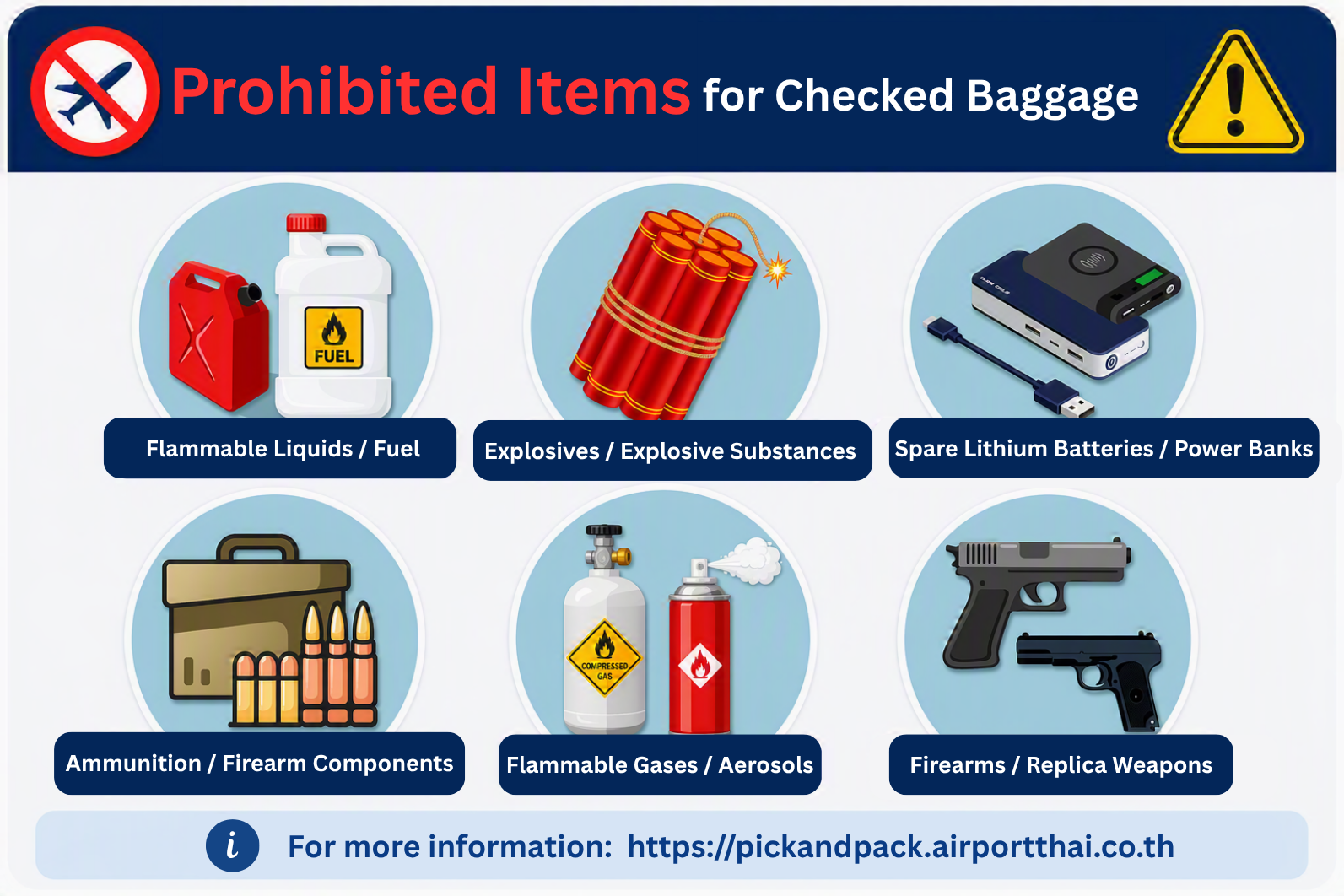
refer to any objects that may be used to commit an act of unlawful interference with civil aviation, or that pose a threat to the safety of aircraft, persons on board, civil aviation facilities, infrastructure, or the general public, as designated by the Notification of the Civil Aviation Authority of Thailand (CAAT). Examples include explosives, firearms, and ammunition.
Spare Lithium Batteries or Power Banks are strictly prohibited in checked baggage. They must be carried in cabin baggage (hand luggage) only, subject to specified capacity limits.
For more information, please visit: https://pickandpack.airportthai.co.th
- Procedure for Opening Baggage Upon Detection of Prohibited Items
1. Continuous Recording: The entire process of opening and inspecting the baggage will be video recorded to ensure transparency and accountability.
2. Seizure of Items: If prohibited items, explosives, suspicious objects, or hazardous materials are detected, screening personnel are legally authorized to seize them. Seized items will not be returned under any circumstances in compliance with the law, as such items may pose a threat to aircraft safety and conform to aviation safety and security measures.
3. Notification: Whenever checked baggage is opened for inspection, a Notice of Baggage Inspection will be placed inside the baggage to inform the owner.
- Passenger Responsibilities
1. Stay Informed: Passengers must be aware of prohibited items. It is the passenger's responsibility to check CAAT regulations and airport safety and security declarations regarding prohibited or illegal items before every flight.
2. Verify Baggage Contents: Passengers must ensure that their checked baggage does not contain any suspicious objects, prohibited items, explosives, hazardous materials, or illegal items.
3. Protect Valuables: Passengers should avoid placing valuables, fragile items, or important personal property in their checked baggage.
- Recommendations on Baggage Locks (TSA Locks)
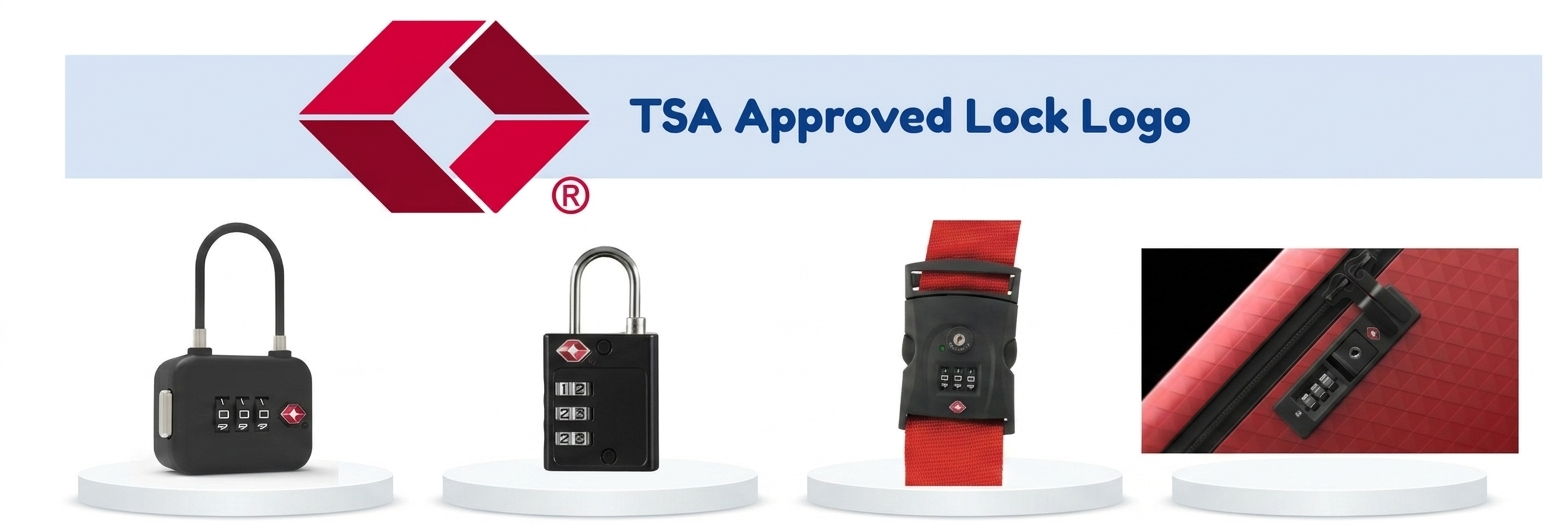
1. TSA Approved Locks: Passengers are highly recommended to use international standard TSA-approved locks. If security personnel need to inspect the baggage, they can use a TSA Master Key to open and re-lock it immediately without causing damage to the lock or baggage.
2. Non-TSA Locks: If non-TSA locks are used and an inspection is required under security measures, personnel must bypass the locking system (e.g., cutting padlocks, forcing straps, or cutting zippers) to perform their legal duty. This action is executed in accordance with legal obligations therefore, passengers must assume all risks for any resulting damage and cannot claim for compensation.